Tips and Inspiration
From Unilever Beauty Experts
;Resize=(486,122))

When it comes to oral care, the first things that come to mind are a bright smile and fresh breath. Everyone obsesses about pearly whites and perfectly straight teeth but forget about gum care – until something starts to hurt.
So, how do you keep your gums healthy before issues start? All Things Beauty asks Dr. Grazielle Go-Salvosa, a dentist with over 10 years of experience and a specialization in pediatric dentistry, to break down what proper gum care really looks like.
Why Are Gums Often Overlooked?
“In many Filipino households, oral health focuses on preventing cavities or sirang ngipin,” begins Dr. Go-Salvosa. “Brushing is taught primarily as a way to avoid tooth decay, while gum health is hardly discussed.”
She adds that gums are often overlooked for several reasons. Whiter teeth and fresh breath are prioritized over healthy gums. “Plus, gums don’t hurt in the early stages of disease, so chances are, people don’t really pay attention to it until then,” she points out. “Add to that the fact that for some, dental visits are not prioritized due to cost.” Misconceptions, fear, and low awareness around oral care also keep people from getting their mouths checked.
The reality is that gum disease can develop without obvious warning signs. Gingivitis, the first stage of gum disease, happens when plaque irritates the gums, leading to mild inflammation that is often easy to miss. Redness or slight bleeding might appear, but there is little to no pain. “There’s also a common misconception that bleeding gums are normal,” adds Dr. Go-Salvosa. Plus, others interpret bleeding gums as a sign to ease up on brushing or flossing.
Gingivitis is still reversible at this stage, but without proper care, bacteria in plaque can proliferate and extend below the gumline, as biofilm (a sticky layer of bacteria) accumulates and calculus (hardened tartar) forms. This can lead to periodontitis, a condition that damages both gum tissue and the supporting bone. “As a dentist, I often tell my patients that healthy teeth can’t exist without having healthy gums,” Dr. Go-Salvosa reiterates.
Common Causes of Poor Gum Health — and the Warning Signs

When it comes to gum care, Dr. Go-Salvosa points out several daily habits that, over time, can lead to inflammation and more serious concerns if left unchecked..
- Plaque buildup along the gumline. Plaque is a sticky film of bacteria that forms constantly. When not removed properly, it hardens into tartar, which cannot be brushed away at home.
- Repeated heavy brushing. Many believe that brushing harder cleans better. But aggressive brushing, especially with a hard-bristled toothbrush or using the wrong technique, can cause gum irritation, recession, bleeding, and increased sensitivity.
- Smoking, vaping, or using e-cigarettes. Tobacco products reduce blood flow to the gums and weaken the body’s ability to fight infection, significantly increasing the risk of severe gum disease.
- Skipping regular dental check-ups. Many patients only see a dentist when something hurts. By then, damage may already be advanced.
According to Dr. Go-Salvosa, some of the early warning signs to watch out for include bleeding gums when flossing or brushing, red or swollen gums, teeth that feel loose or mobile, bad breath that doesn’t go away, and abscess or pus between the teeth and gums. These symptoms are not cosmetic issues, but biological signals of inflammation and infection, or in some cases, underlying health conditions that need to be checked.
What is Proper Oral Hygiene? 7 Tips for Better Gum Care

If you’re Googling, how to take care of my teeth and gums the proper way, know that the answer doesn’t involve complicated routines. What’s more important is learning the right techniques and being consistent with your oral hygiene. Dr. Go-Salvosa shares a few essential tips to strengthen and protect your gums:
1. Floss at night before brushing.
Flossing removes plaque and food particles between teeth and along the gumline, the areas a toothbrush cannot reach. Use a gentle sawing motion, curve the floss around each tooth, and move the floss to a fresh section as you go.
2. Brush twice daily using the correct technique.
Use a soft-bristled toothbrush positioned at a 45-degree angle to the gumline. Apply gentle, circular motions to clean all surfaces. Brush for two minutes and gently clean the tongue. After brushing, spit out excess toothpaste, but do not rinse immediately to allow fluoride to protect the enamel and support the gums.
3. Use an antibacterial mouthwash if recommended.
Mouthwash can help reduce bacteria, especially for patients with gum problems, but it should complement – and not replace – brushing and flossing. Check with your dentist if you need this step in your regimen.
4. Keep regular dental visits as advised.
While most people only need to see a dentist twice a year, others may require more frequent visits depending on their oral health needs.
Routine check-ups allow early detection of cavities, gum disease, and oral cancer. Preventive care is almost always more affordable than treatment.
5. Choose the right toothpaste.
Look for fluoride, either sodium fluoride or stannous fluoride, which helps protect teeth against cavities and gum inflammation. Try closeup Gel Toothpaste with Antibacterial Zinc Green Menthol Fresh, which eliminates odor-causing bacteria and gives you long-lasting fresh breath with regular use.
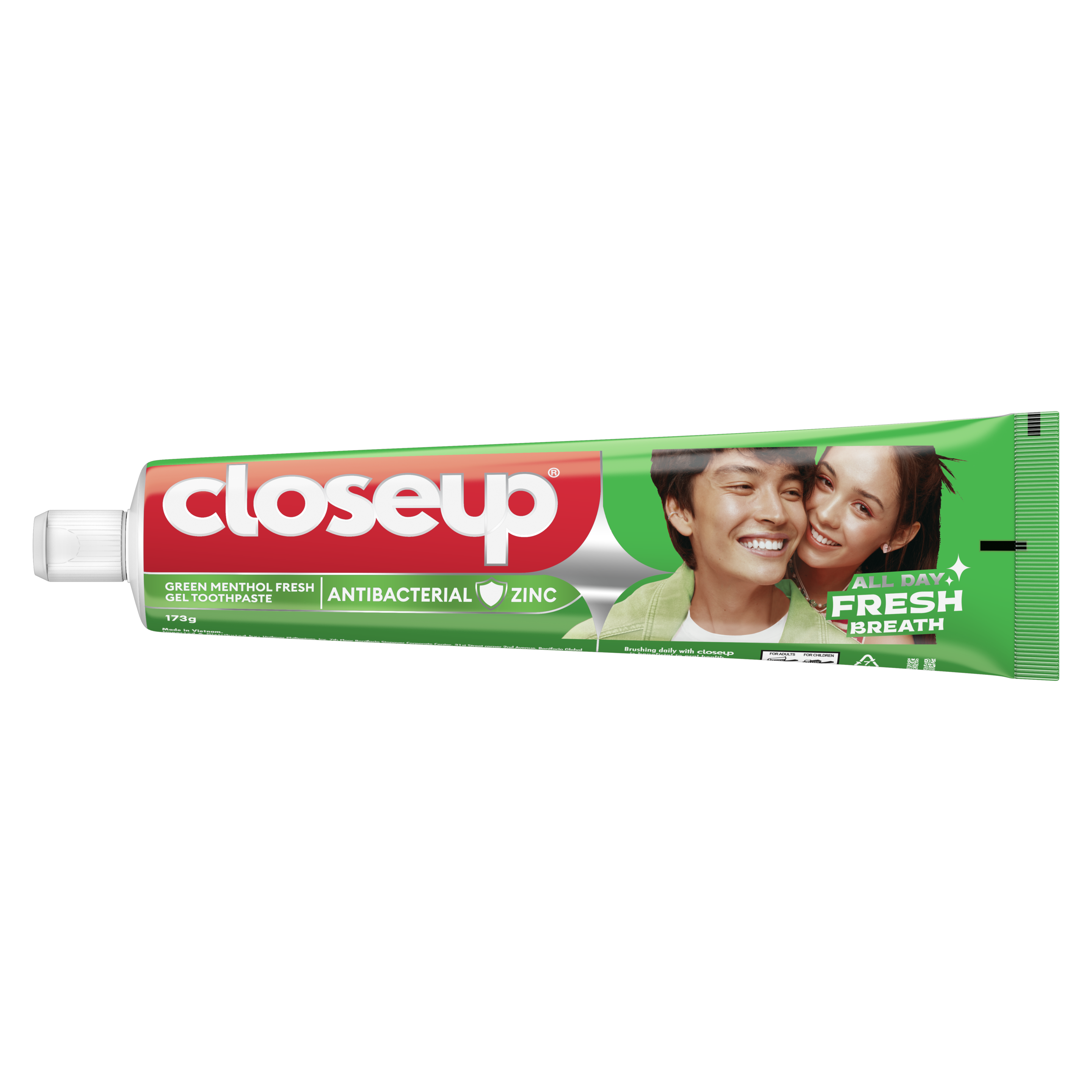
For sensitivity caused by gum recession, gum care toothpastes with desensitizing ingredients can help make brushing gentler.
6. Mind the fluoride content.
Adults and children over seven should use toothpaste containing 1,350 to 1,500 ppm (parts per million) fluoride for maximum protection. Children under six should use at least 1,000 ppm, applied in a smear (ages 0 to 2) or a pea-sized amount (ages 3 to 6) to minimize swallowing.
7. Replace your toothbrush regularly.
Soft-bristled toothbrushes prevent enamel wear and gum recession, while electric toothbrushes can help if you struggle with limited dexterity or braces. Replace your toothbrush or brush head every three to four months, as worn bristles lose effectiveness.
It’s not too late to start new habits. If all the toothpaste commercials you grew up seeing were only promoting whiter teeth and fresh breath, now’s the time to give your gums the attention they deserve.