Tips and Inspiration
From Unilever Beauty Experts
;Resize=(486,122))

- How Do You Know If Your Skin Is Stressed?
- 7 Common Skin Problems Caused by Stress
- 1. Acne breakouts can emerge due to stress.
- 2. Dull and textured skin are telltale signs of your body in distress.
- 3. Eczema flare-ups happen when you’re struggling mentally.
- 4. Inflammation is one way your body reacts to stress.
- 5. Psoriasis flare-ups can be triggered by mental overload.
- 6. Rosacea symptoms can intensify when you’re always exhausted.
- 7. Scalp rash and hair issues can be signs you’re overworked.
- How to Manage Stress-Related Skin Problems
Ding! Ding! Ding! Email pings are going off. You’ve got multiple tabs open, shuffling through half-finished tasks, and wondering if you’ve actually attached that file to your email. Phew, take a breather, girl. This ngarag feeling can drain you mentally and trigger skin problems caused by stress.
Why don’t you slow down and see how stress is messing with your skin? That way, you can stop it in its tracks or deal with it head on.
How Do You Know If Your Skin Is Stressed?

The simple answer? You’ll see visible signs on your skin. A study in the International Journal of Medical Research & Health Sciences lists down inflammation, acne, hives and rashes, itchiness, and dryness as some of the common signs of stress on your skin.
In short bursts, cortisol helps you deal with challenges by boosting alertness and energy. But here’s the catch: When stress drags on, cortisol doesn’t know when to call it a day. It keeps flooding your system, and that’s when your skin pays the price. Too much cortisol pushes your oil glands to produce more sebum, weakens your skin’s protective barrier, ramps up inflammation, and can delay wound healing.
Before that happens, take a quiz on stress levels to determine if yours is still manageable or already off the charts.
7 Common Skin Problems Caused by Stress
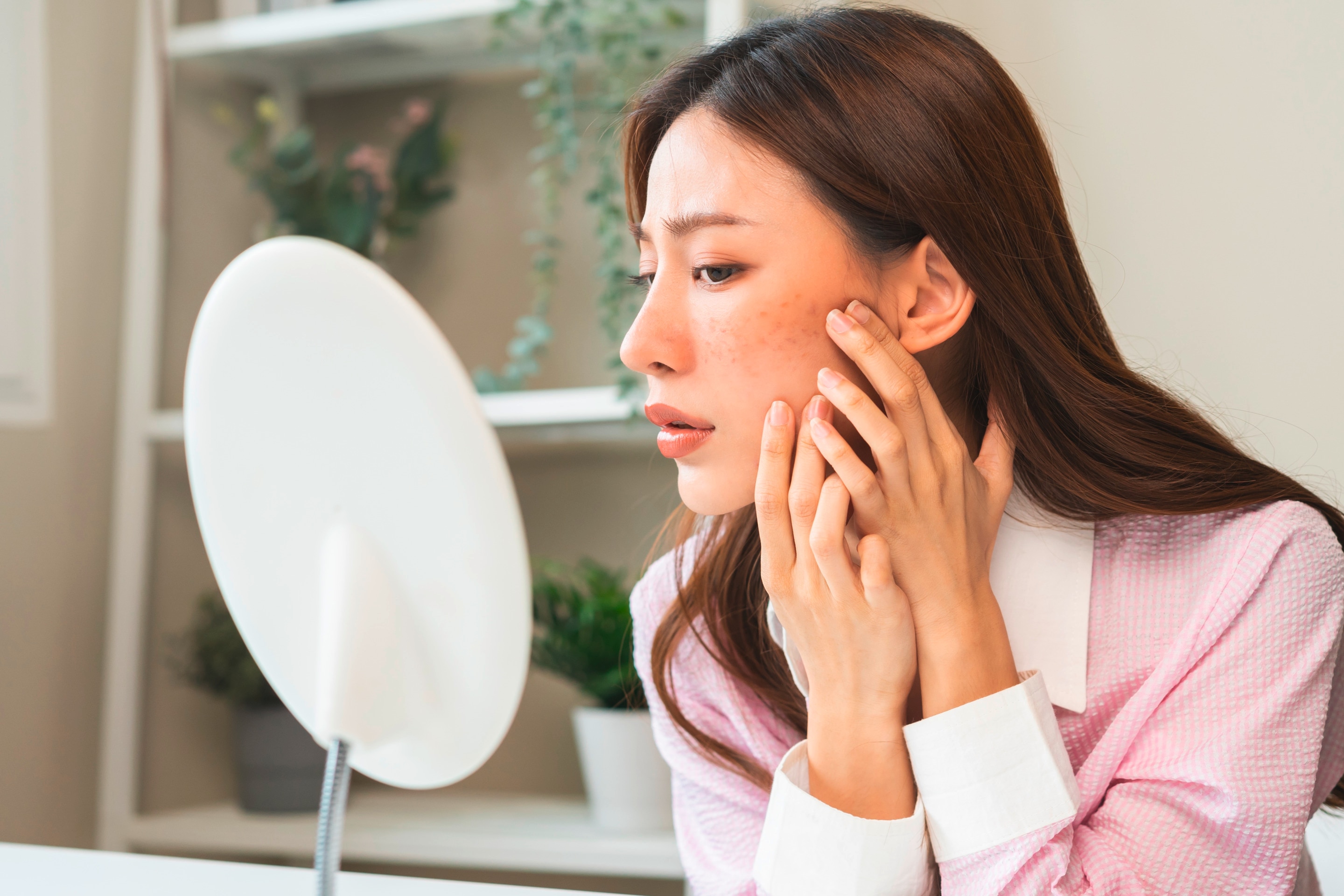
When your stress hormones go into overdrive, your skin often takes the hit. The effects can vary, but they all share one thing in common: They disrupt your skin’s natural rhythm.
1. Acne breakouts can emerge due to stress.
Spikes in cortisol levels cause your oil glands to ramp up sebum production. Excess oil mixes with dead skin cells, which then clog pores and fuel the growth of acne-causing bacteria. The result? Whiteheads, blackheads, and painful, inflamed pimples, especially in hormone-sensitive zones like the jawline and chin.
2. Dull and textured skin are telltale signs of your body in distress.
Being in a state of stress can divert blood flow away from the skin toward vital organs. And as a result, fewer nutrients and oxygen reach your face. Over time, this reduced circulation, combined with dehydration and poor sleep, dulls your natural glow and makes your skin appear flat or sallow.
3. Eczema flare-ups happen when you’re struggling mentally.
If you’re already dealing with eczema, stress can cause your skin to become itchier, redder, and more stubborn. That’s because stress disrupts your skin barrier and ramps up inflammation. On top of that, cortisol fluctuations can also slow down healing, trapping you in the itch-scratch-flare cycle.
4. Inflammation is one way your body reacts to stress.
When you’re in disarray, your body responds by activating immune pathways that trigger histamine release – the same chemical behind allergic reactions that can manifest as stress hives and stress rashes. This can lead to sudden, itchy welts on the face, neck, or arms that may last from a few hours to several days.
5. Psoriasis flare-ups can be triggered by mental overload.
Psoriasis is an autoimmune condition that causes skin cells to multiply too quickly, resulting in thick, scaly patches. If you’ve been dealing with psoriasis, stress can ramp up inflammation and trigger flare-ups, or it can worsen existing plaques, particularly in areas such as the elbows, knees, scalp, and lower back.
6. Rosacea symptoms can intensify when you’re always exhausted.
7. Scalp rash and hair issues can be signs you’re overworked.
When you’re stressed, your immune response shifts, which can sometimes allow Malassezia yeast (a fungus that normally lives harmlessly on the scalp) to multiply unchecked. This overgrowth triggers inflammation and flaking, leading to a scalp rash known as seborrheic dermatitis. This overgrowth irritates the skin, causing itching, redness, and dandruff-like flaking along the hairline and parting.
How to Manage Stress-Related Skin Problems
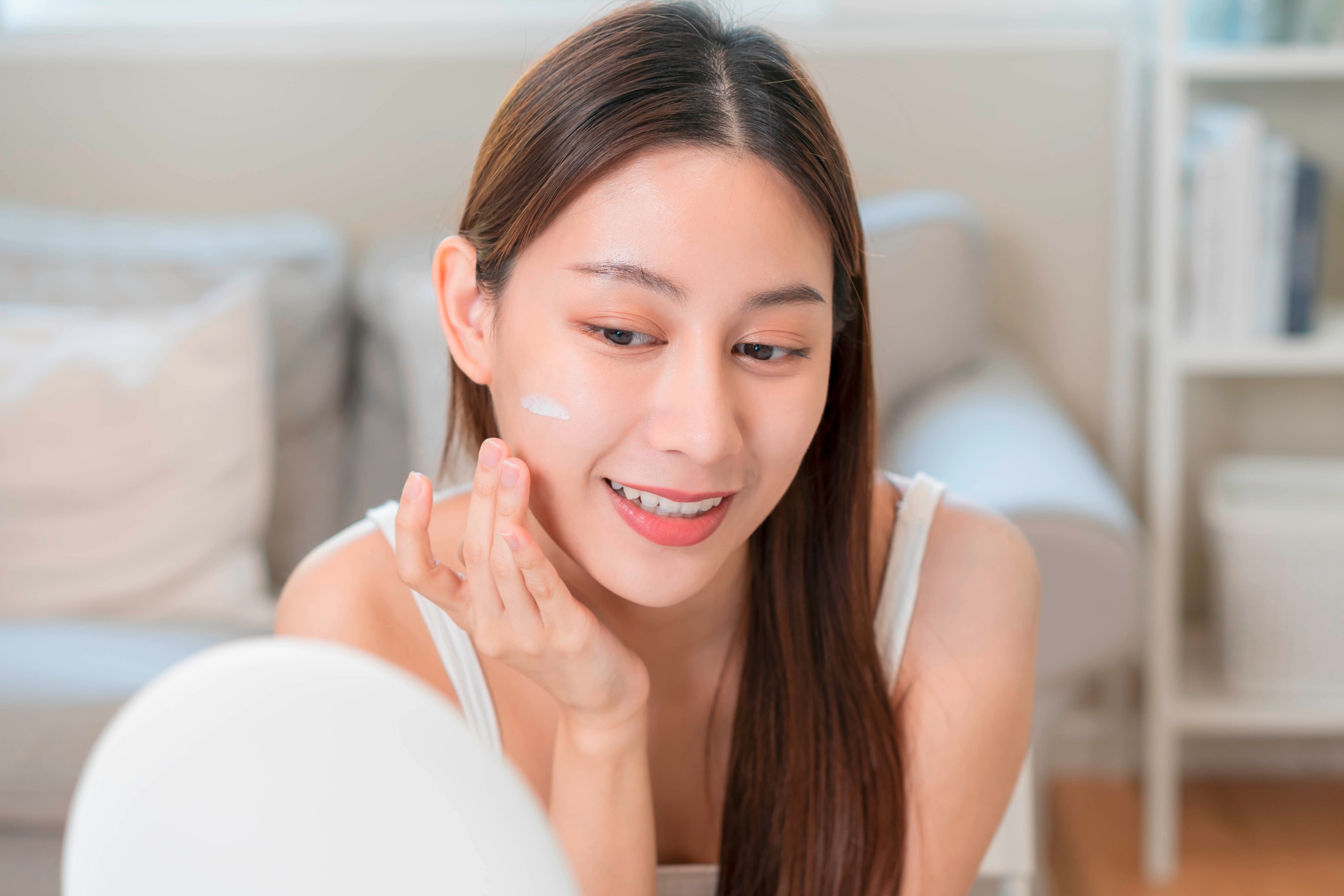
With proper self-care, healthy habits, and a little help from sensitive skin-friendly products, you can keep your skin well-nourished, hydrated, and calm – even when your workload or your life gets super hectic.
1. Calm your mind and body.
You can’t always control stressful situations, but you can train your body to handle them more effectively. Even a quick two- or three-minute breathing break can help lower cortisol and ease tension. Stand up and stretch during coffee breaks or try a short mindfulness exercise during your commute. These small efforts can reset your mood and stop stress from affecting your skin.
2. Stay on top of your body and skincare routine.
Stress can make you tempted to skip your skincare regimen (you think you have better things to do, huh?), but that’s exactly when your skin needs consistency the most. Keep your cleansing routine gentle to avoid stripping natural oils.
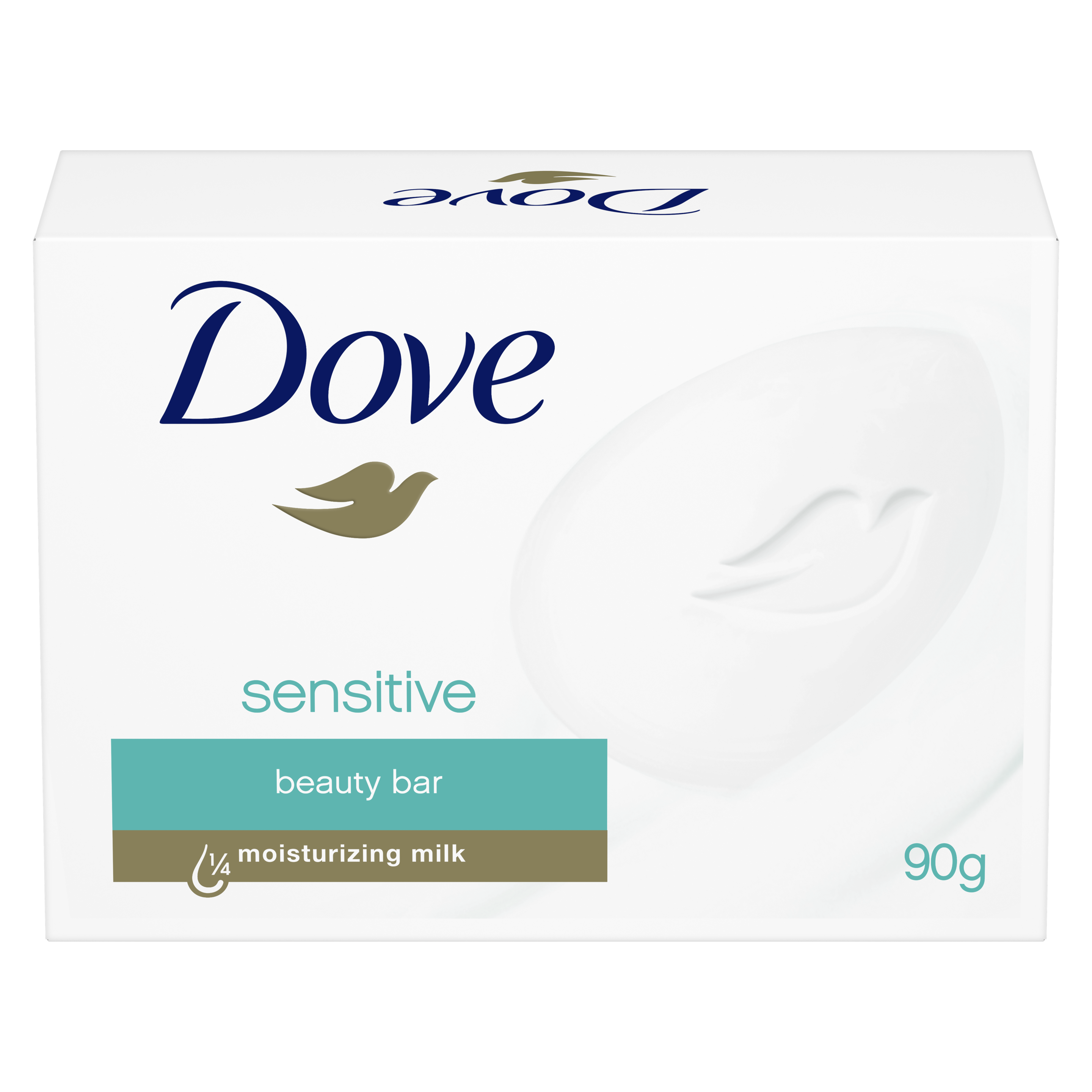
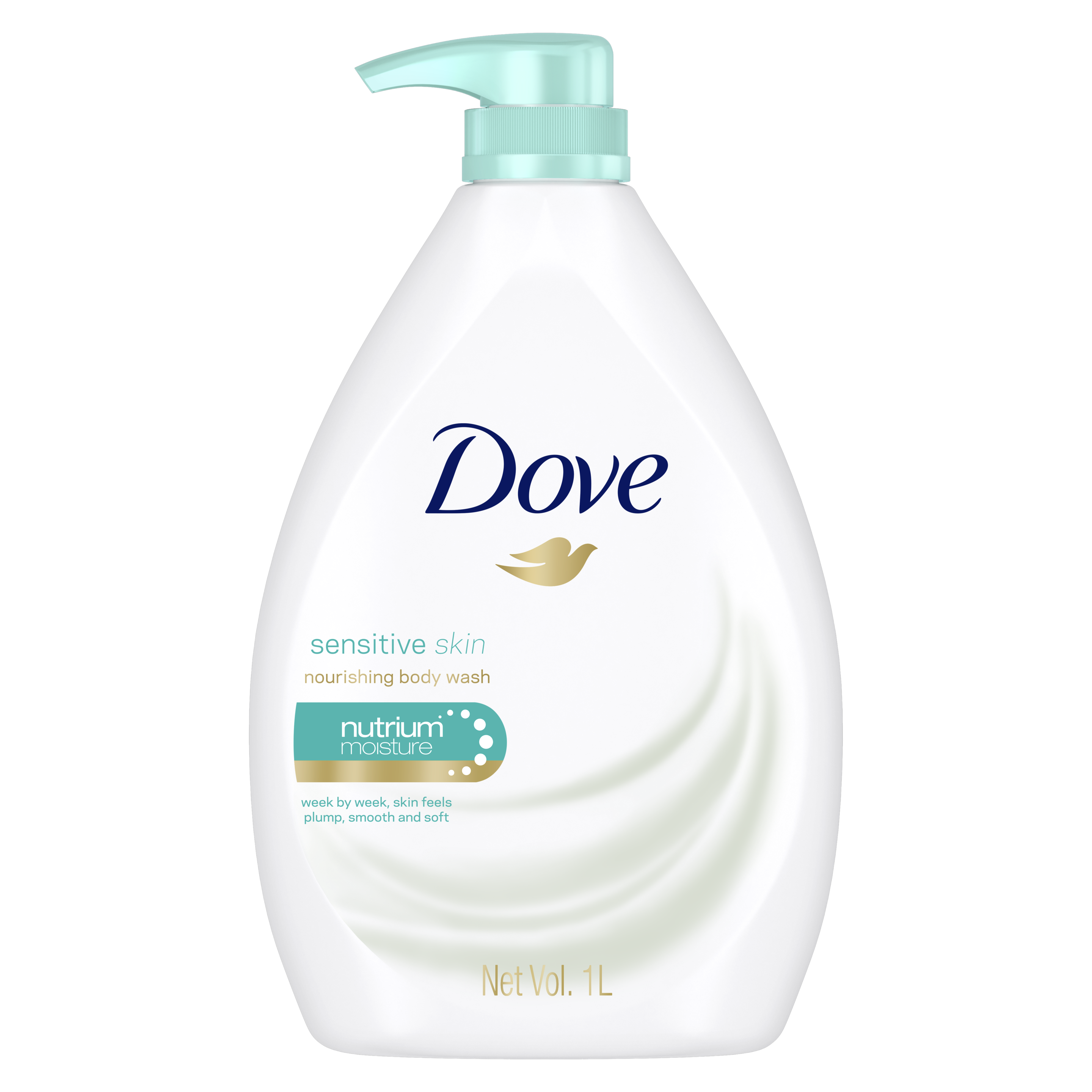
Use hypoallergenic, dermatologist-recommended products to keep your skin calm and irritation-free. Dove Sensitive Beauty Bar can be used on your hands, body, or face. Infused with moisturizing cream, it cleanses without irritating the skin, leaving it soft, smooth, and protected. If you prefer the lather of a body wash, pamper your body with Dove Sensitive Skin Body Wash to get soft, soothed skin. It’s enriched with Moisture Renew Blend that works in harmony with your skin’s natural processes.
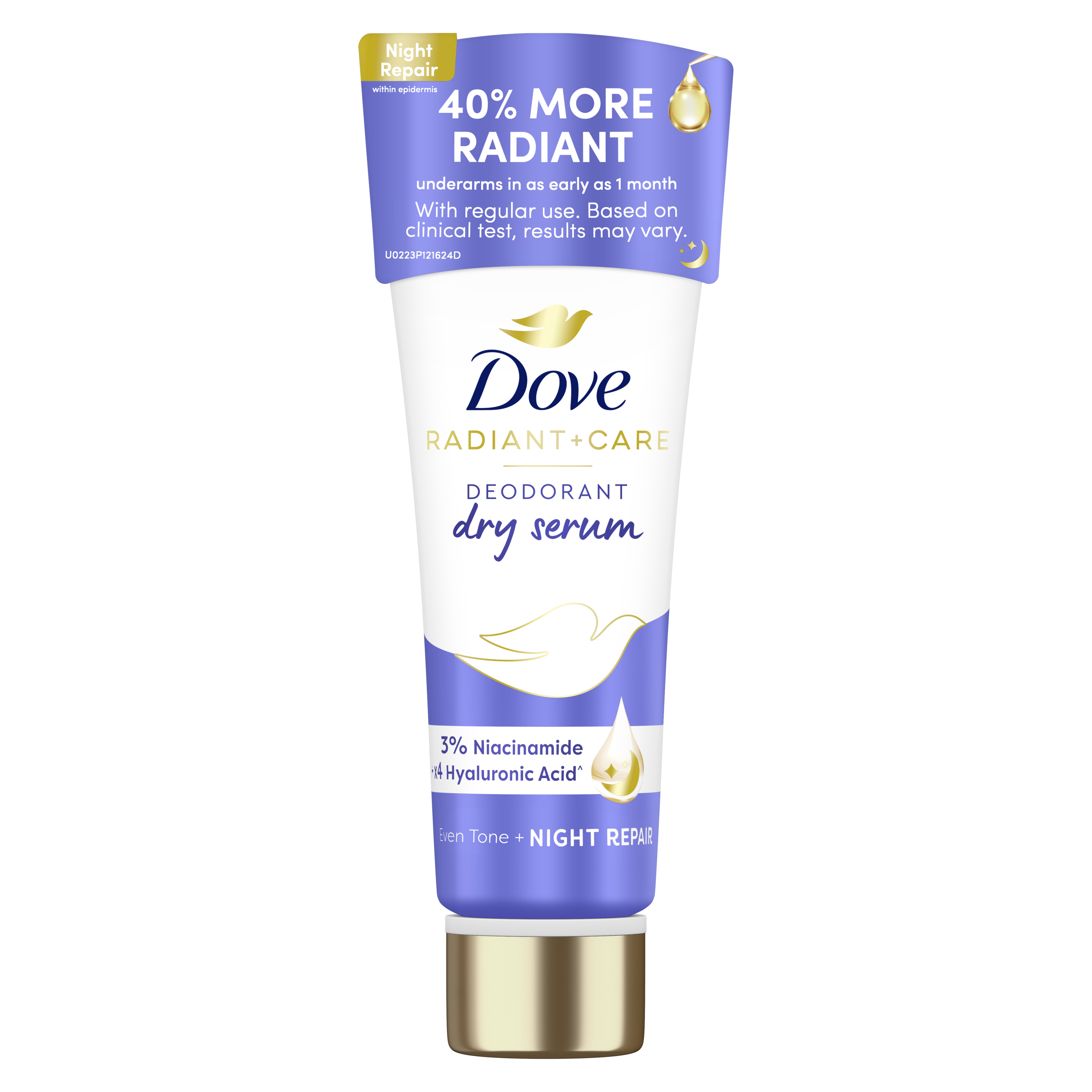
As a final step in your evening routine, apply 4 to 6 swipes of Dove Radiant + Care Deodorant Dry Serum - Night Repair with 3% Niacinamide and x4 Hyaluronic Acid on both underarms. It’s formulated to help boost radiance and deeply hydrate your underarms while you sleep.
3. Nourish your skin from within.
Staying hydrated keeps your skin cells plump and helps flush out toxins, so make water your go-to drink. Getting seven to nine hours of quality sleep also allows your skin to repair and regenerate.
Ease up on excess caffeine (yes, especially that third three-in-one coffee) since it can leave your skin parched. Avoid stress eating and instead load your plate with antioxidant-rich foods, such as berries, leafy greens, and tomatoes, to help combat free radical damage and support your skin’s natural repair process.
4. Know when to see a dermatologist.
You can do all the breathing exercises, stick to gentle cleansers, and load up on antioxidants all you want, but sometimes your skin still acts up. That’s your cue to call in a dermatologist. Trying a bunch of new products on your own can backfire and trigger more irritation or flare-ups. A dermatologist can figure out what’s going on and guide you toward treatments that work.
Stress-inducing moments will forever be part of life (that’s reality!), but your skin doesn’t have to be collateral damage. By learning how to spot and manage skin problems caused by stress, you can break the cycle before it takes a toll on you – and your confidence. Treat your skin kindly, take those well-deserved breaks, and remember: Deadlines can wait, but your mental well-being (and your skin) shouldn’t.