Tips and Inspiration
From Unilever Beauty Experts
;Resize=(486,122))

Is your hair slowly revealing your age? Don’t stress. Seeing white strands or more hair fall may indicate signs of aging – and that’s okay. At this point, your locks likely just need more attention and extra TLC. Read on to find out how to recognize the signs of aging hair and how you can look and feel your best at this phase.
What Are the Signs of Aging Hair?
Aging brings about many changes in the body – including your hair – so it’s best to understand what’s happening and what to expect. You're better off managing the signs of maturing hair early on.
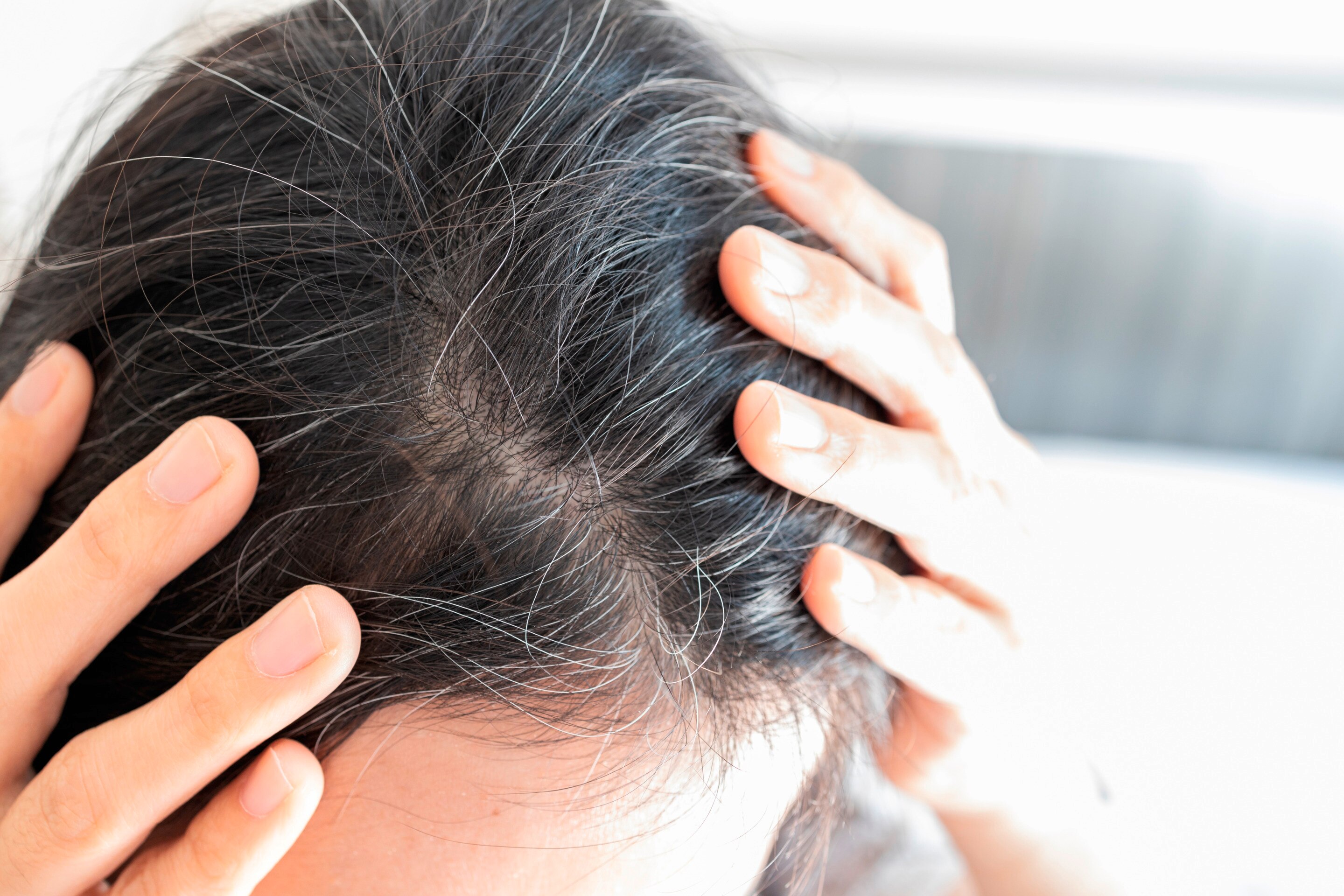
Are you starting to see more white strands?
Your hair might be slowly transitioning to its salt-and-pepper stage. As you age, your hair follicles produce less melanin, the pigment that gives your hair its color. It’s nothing to worry about!
Do you think your hair looks dull and less vibrant?
This can be due to the scalp producing less sebum, which can cause dryness and frizziness. Hair damage accumulated through the years – maybe you heat-style or color your hair a lot – can also make it look lifeless and less shiny.
Are you noticing more hair loss and breakage than usual?
The decreased sebum and lack of moisture in your scalp can also weaken hair follicles and make your hair strands more brittle. Your hair loses protection and strength, making it more prone to damage.
How Can You Care for Aging Hair?
Whether you decide to color your hair or embrace your grays is entirely up to you! What’s important is keeping your hair and scalp healthy. Adjusting your lifestyle – from the hair products you use to the food you eat – can help make a difference in your hair health.
1. Don’t pull out your hair.
It might be tempting, but don’t pluck out every white hair strand you spot! Doing so can damage your hair follicles, resulting in bald spots and hair loss.
2. Give your hair extra care.
The needs of your hair change over time, too. Use shampoo and conditioner that are suited to your current hair condition. You can also add an extra layer of protection and nourishment by using hair serums and masks.
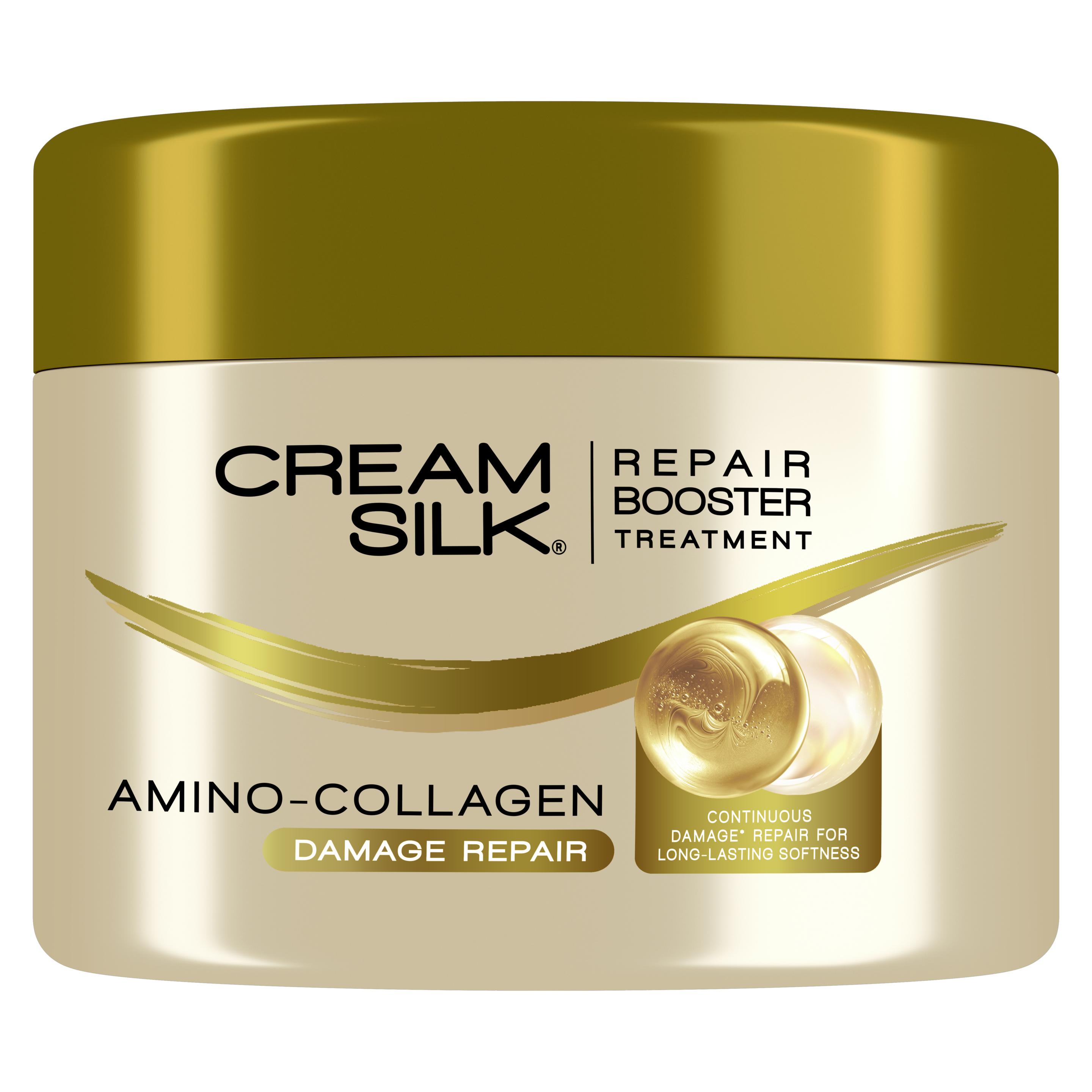
Cream Silk Repair Booster Treatment Amino-Collagen Damage Repair, for example, contains Amino-Collagen + Boosters to give hair continuous damage repair for long-lasting soft and silky locks.
3. Try other hairstyles!
Limit styling your hair with blow dryers and irons, as these can further cause heat damage. Avoid hairstyles like a tight ponytail, for example, to minimize stress on your hair follicles. If possible, let your hair down (literally!) and give hairstyling a rest.
4. Get a hair trim regularly.
A haircut every six to eight weeks can help control the frizz and tangles in your hair – lessening tugging and pulling as you brush.
5. Protect your scalp with accessories.
Shield your hair and scalp from sun damage in style. When traveling or out in the sun, it’s best to wear a hat or tie a silk scarf over your head. It adds an interesting touch to your look, too!
6. Watch what you eat.
Hair strands become more prone to breakage as hair follicles weaken. While this happens with age, the condition of your hair can still benefit from a healthy diet. You can start by consuming more lean proteins, iron, zinc, omega-3 fatty acids, and vitamins C, E, and B-complex in your daily meals.
7. Consult with a professional.
If you’re seeing more hair fall than usual, this could be a sign of excessive thinning or breakage due to maturing hair. You’ll likely find extra strands on your brush, your pillow, or in the shower. Check with an expert as soon as possible so they can suggest a treatment plan early on.
Embracing aging hair is all about understanding what it needs and how to best care for it. Keep these tips in mind, and you’ll be well on your way to aging with grace – and grays.